
 ←
←
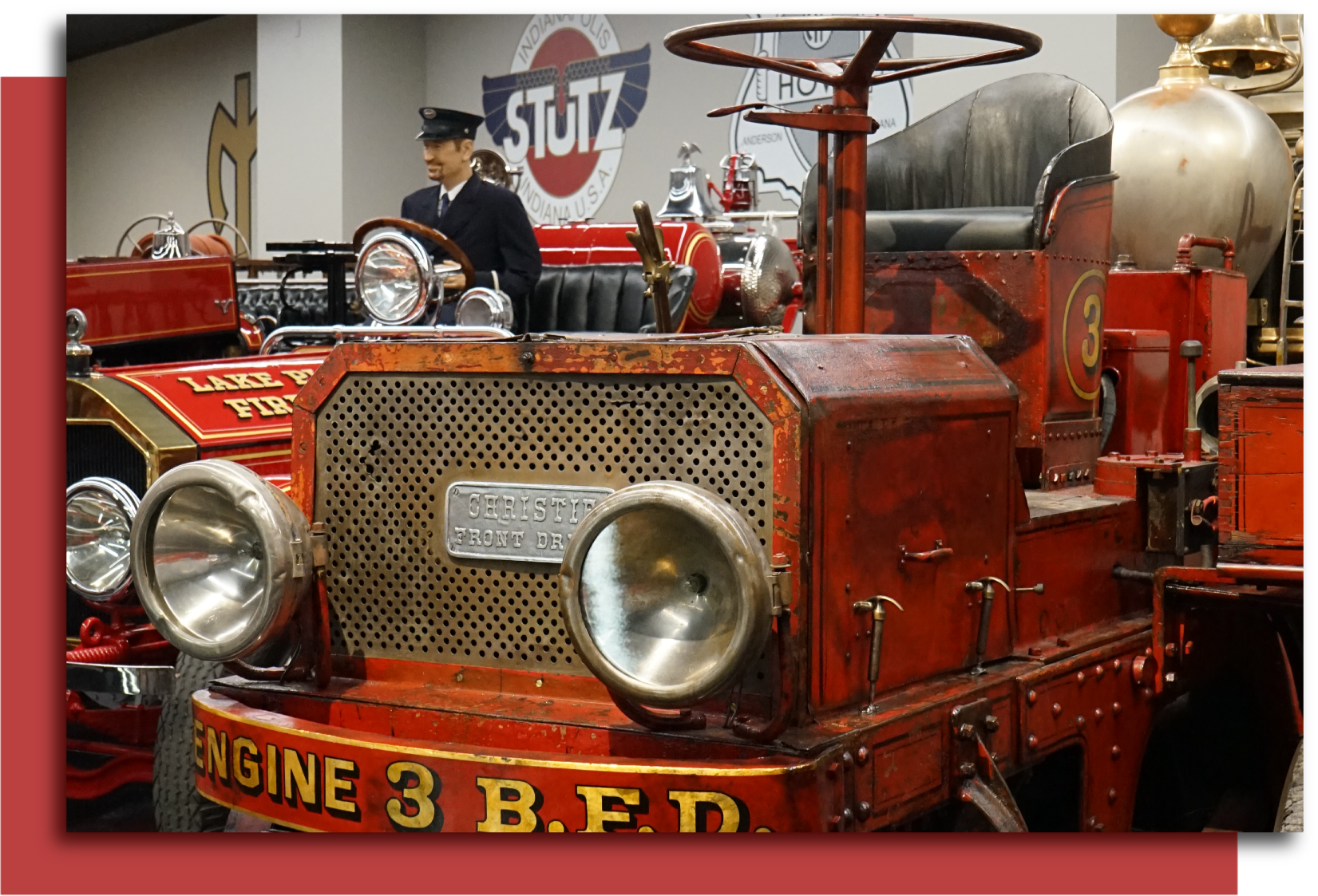

The Christie steam engine, invented in 1911 by J. Walter Christie, marked an important transition from the steam fire engine to motorized apparatus. Gasoline-powered transportation was growing in popularity, but firefighters weren’t yet ready to move away from steam-powered engines. Christie, a race car driver who manufactured front-wheel-drive cars, created a gasoline-powered tractor to pull steam engines and replace horses. Because the cost and hard work of maintaining horses were becoming too much, these Christie tractors quickly became popular with many fire companies in larger cities. Between 1911 and 1920, over 600 tractors were produced and utilized by firefighting companies all across the United States. Fewer than 10 are believed to exist today, making this a very rare piece.
This Christie steamer consists of an 1896 Amoskeag steam apparatus paired with a Christie front-drive tractor added in 1917. Originally, the apparatus used a 6-volt electrical system that required hand cranking, but it was replaced with a 12-volt system in 1918 to accommodate a starter for the tractor. It also carried its own fire hydrant on runs to connect to the Boston water mains. The Boston Fire Department used this Christie until 1926, when it was taken out of service and used as a thawer until 1948. After that, the Boston Fire Department kept the Christie in storage until it was discovered and put up for auction. In 2023, Randy Koorsen purchased the Christie and made it the centerpiece of the Koorsen Museum.


